Hands-on science editing for K–12
I help K–12 publishers and education organizations strengthen science curriculum by shaping lessons, investigations, and assessments so content is clear, accurate, and pedagogically sound.Science curriculum can break down when lessons, investigations, and assessments don’t quite line up, leaving teachers to fill in the gaps. Developmental editing improves clarity, coherence, and scientific accuracy so materials function as complete, usable learning experiences across standards-based frameworks (e.g., NGSS, TEKS, CPALMS). My work focuses on shaping instructional materials to support student sensemaking, logical progression, and real classroom use.
Samples
PhD Science K–5
Level 2 Module 3: Plants
Materials are published by Great Minds as open-source OER and are included here for reference only (free registration required).This Grade 2 life science module was developed for the National Edition of PhD Science, a phenomenon-based, NGSS-aligned curriculum. The module supports student sensemaking about plant growth, pollination, and seed dispersal. As lead science editor, I worked closely with the writing team to shape lesson storylines and learning progressions and conducted comprehensive editorial reviews across all module components. I ensured the scientific accuracy and coherence of all program materials, reviewed and approved artwork, edited for grammar and style, and helped teams refine assessments and investigations.As the final editorial decision-maker for all content throughout development and production, my work ensured that lessons, investigations, and assessments functioned as an integrated learning system. Aligning core content, visual assets, and supporting materials resulted in higher usability for teachers and clearer sensemaking for students.

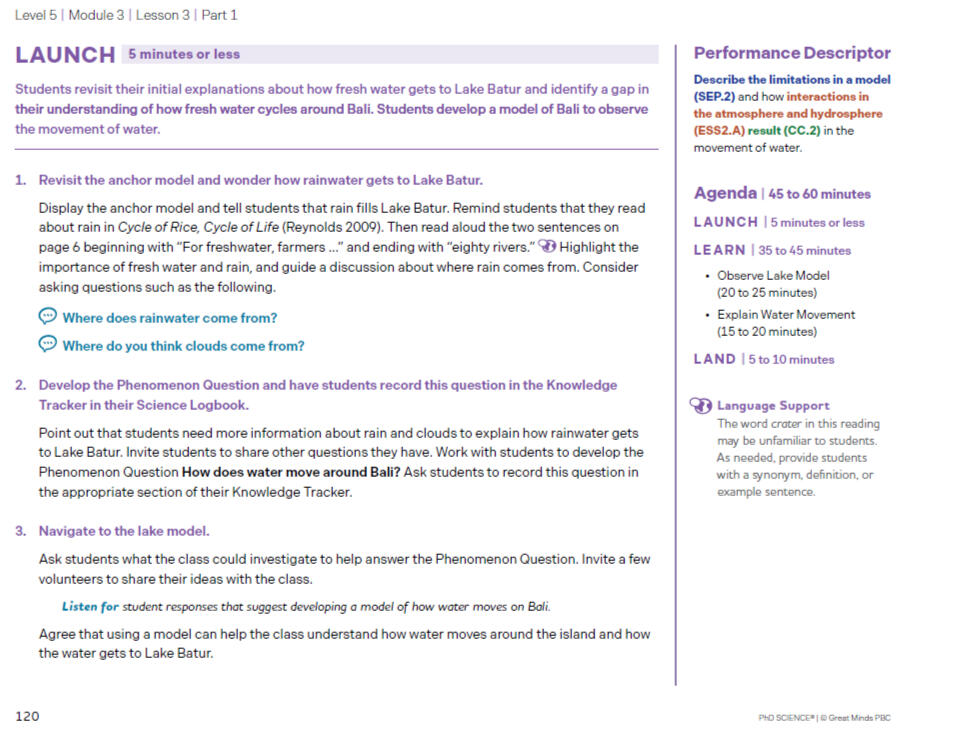
Modeling Water Movement in a Phenomenon-Based Science Lesson
Lesson development emphasizing scientific modeling and progression from observation to explanation. Additional excerpts available upon request.This lesson sample demonstrates how instructional sequences were developed and refined to support student sensemaking through the use of models. The lesson guides students from initial observations to increasingly sophisticated explanations by anchoring discussion in a shared physical model and revisiting prior ideas as new evidence is introduced.Editorial work focused on strengthening the coherence of the lesson sequence, clarifying teacher-facing guidance, and ensuring that scientific ideas were introduced at an appropriate level of complexity. Particular attention was given to how questions, prompts, and explanations supported causal reasoning and helped students connect observable changes in the model to underlying processes in Earth’s systems.
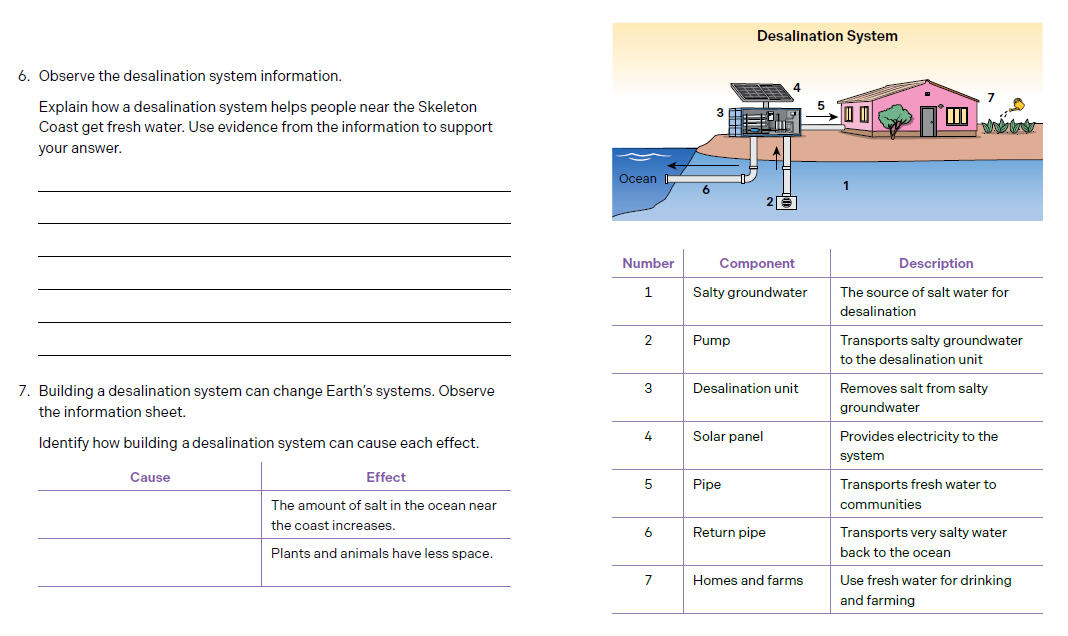
Assessment Design for Student Sensemaking
End-of-module assessment item supporting explanation and evidence-based reasoning. Additional excerpts available upon request.This assessment sample illustrates how assessment tasks were designed and refined to elicit meaningful evidence of student sensemaking rather than surface-level recall. Items were structured to require students to explain phenomena, use evidence from investigations or models, and apply scientific reasoning consistent with classroom instruction.Editorial work focused on ensuring that assessment prompts were scientifically accurate, clearly worded, and aligned to the intent of the learning sequence. Particular attention was given to task clarity, cognitive demand, and the relationship between what students were asked to do during instruction and how their understanding was assessed. Scoring guidance was developed to support consistent interpretation of student responses while preserving opportunities to recognize partial understanding.
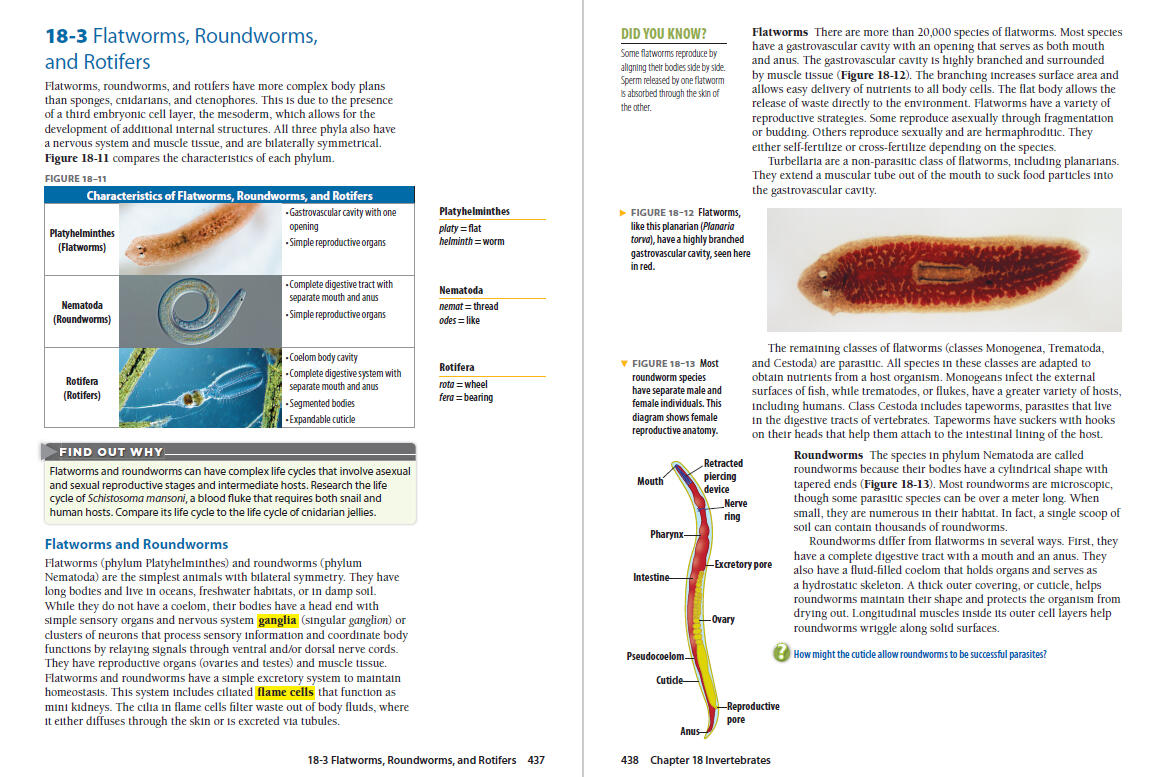
Scientific Accuracy and Concept Development in High School Biology
High school biology text focused on disciplinary accuracy and concept sequencing. Additional excerpts available upon request.Grade 9 biology instructional text introducing flatworms as a model organism for understanding animal structure and function. The content supports early secondary students in building accurate biological concepts related to anatomy, physiology, and adaptation.This sample illustrates editorial work focused on shaping scientifically accurate life science content for a high school audience. The flatworms text was developed to introduce complex biological ideas with appropriate precision, ensuring that explanations were both accessible to Grade 9 students and faithful to disciplinary understanding.Editorial attention centered on the accuracy and clarity of biological language, the sequencing of concepts, and the alignment between text, visuals, and student-facing explanations. Decisions about terminology, level of detail, and emphasis were guided by an understanding of how high school students develop biological reasoning and prepare for more advanced coursework.
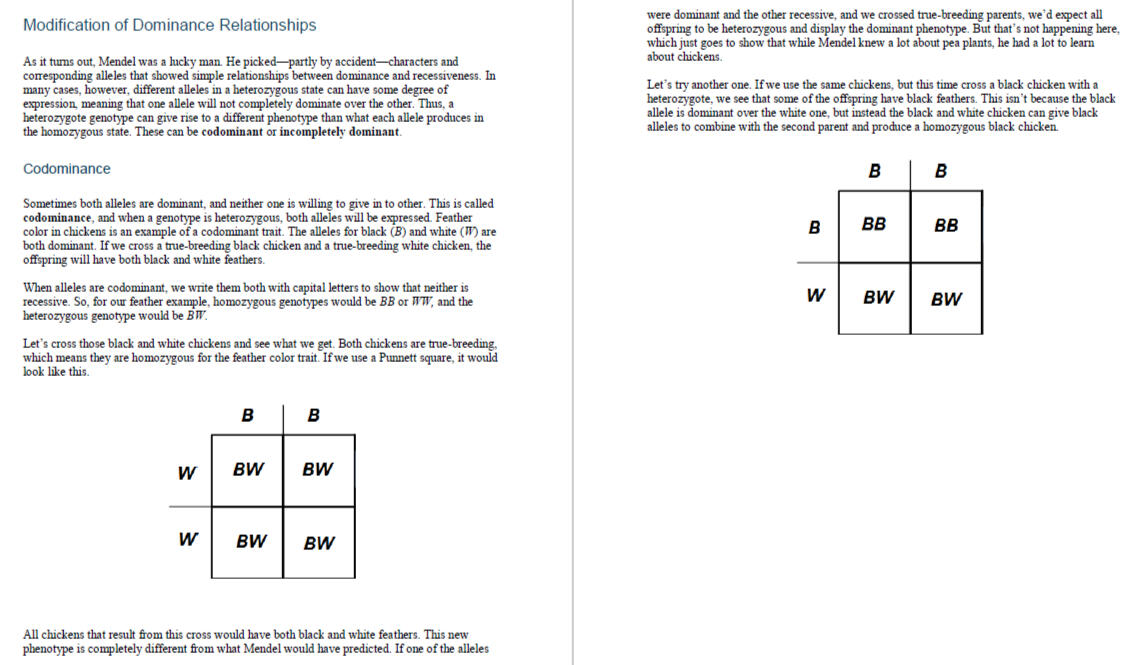
Digital Curriculum Development for High School Genetics
Digital-first genetics lesson developed for online delivery. Additional excerpts available upon request.Grade 9–10 genetics lesson developed for a digital-only biology program. This manuscript was created for ingestion into an online learning platform and reflects the established instructional voice and stylistic conventions of the publisher.This sample represents curriculum development work for a fully digital biology program, where content structure, clarity, and pacing were designed specifically for online delivery. The genetics lesson introduces core concepts related to inheritance and variation, with attention to sequencing ideas in a way that supports student understanding in a self-guided or blended learning environment.For this project, I served as the curriculum developer, shaping the instructional approach, explanations, and learning flow of the lesson. The language and tone reflect the publisher’s distinct style, while maintaining scientific accuracy and conceptual coherence. Development decisions were informed by the constraints and affordances of digital platforms, including screen-based reading, chunking of information, and alignment between explanatory text and interactive elements.
Jessica Dyer is a science editor and curriculum developer with experience supporting K–12 science programs across elementary, middle, and high school grade bands. Her work focuses on strengthening scientific accuracy, instructional coherence, and accessibility so lessons, investigations, and assessments function as cohesive learning experiences that support both students and teachers.She has worked with publishers and education organizations including Great Minds, Kendall Hunt, Kiddom, and Shmoop. Her approach emphasizes careful editorial judgment, close collaboration with writers and content teams, and an understanding of the practical realities of classroom and digital instruction.
Contact
Jessica Dyer
Science Editor and Curriculum Developer
[email protected]